
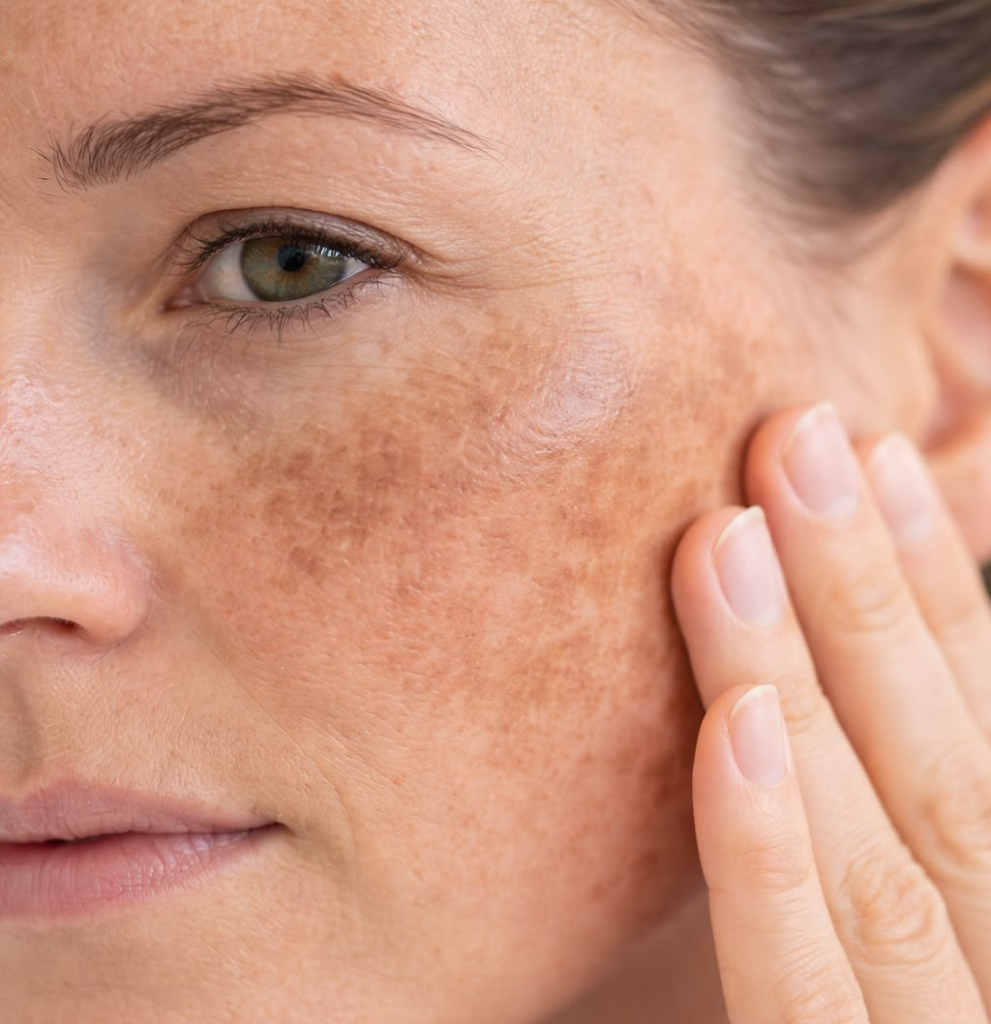
Hyperpigmentation: Understanding and Preventing Dark Spots on Mediterranean Skin
Why MENA skin is uniquely prone to uneven tone — and the science-backed solutions that actually work
In This Guide
Why MENA Skin Is More Prone to Dark Spots
Skin across the Middle East and North Africa carries a unique fingerprint: higher melanin density that provides some natural sun protection but also makes post-inflammatory hyperpigmentation (PIH) far more likely after any irritation, acne, or injury.
Combine this biology with intense year-round UV exposure — Morocco sees UV indexes of 11+ for six months annually — and you have the perfect storm for persistent dark spots that resist conventional treatments.
“In my Casablanca practice, 70% of patients seeking treatment have PIH from improperly managed acne or aggressive at-home peeling. The key is prevention, not correction.”
The 3 Types of Hyperpigmentation You Need to Know
1. Sun Spots (Solar Lentigines)
Flat, brown patches on sun-exposed areas — cheeks, forehead, backs of hands. Caused by cumulative UV damage triggering localized melanin overproduction. Common after age 30 in MENA skin.
2. Melasma (The “Mask of Pregnancy”)
Symmetric, blotchy brown-gray patches on cheeks, forehead, upper lip, and chin. Hormonally driven — pregnancy, contraceptives, thyroid — and notoriously stubborn without proper management.
3. Post-Inflammatory Hyperpigmentation (PIH)
Dark marks left after acne, insect bites, burns, or friction. The #1 complaint among darker skin tones. The spot often lingers months after the original injury has healed.
The 4 Actives That Actually Work on MENA Skin
Niacinamide (Vitamin B3) — 5-10%
Regulates melanin transfer from melanocytes to skin cells. Reduces existing PIH, prevents new spots, and strengthens barrier function simultaneously. The most tolerable brightening active for sensitive skin.
Vitamin C — Stabilized Derivatives
Antioxidant protection plus melanin oxidation prevention. The “gold standard” for brightening, but stability matters — pure L-ascorbic acid degrades rapidly in Moroccan heat. Derivatives like ascorbyl glucoside or magnesium ascorbyl phosphate offer better shelf life and penetration.
Azelaic Acid — 10-20%
Tyrosinase inhibitor with anti-inflammatory bonus. First-line treatment for melasma in many dermatology guidelines. Our derived azelaic acid offers comparable efficacy with improved tolerance for daily use.
Retinoids — Encapsulated
Accelerate cell turnover to shed pigmented cells faster. The encapsulation technology in our retinol serum prevents the irritation that typically triggers PIH on darker skin.
The Non-Negotiable: SPF 50+ Every Single Day
Without daily SPF 50+, no hyperpigmentation treatment will work. UV exposure stimulates melanin production continuously, undoing weeks of progress in a single unprotected afternoon.
On MENA skin, choose SPF that:
- Offers broad-spectrum UVA/UVB protection (PA++++ rating)
- Uses iron oxides for visible light protection (critical for melasma)
- Has no white cast — look for tinted or clear formulations
- Is non-comedogenic for humid climates
Your Complete Anti-Spot Routine with Skinsous
Step 1: Gentle cleanser (pH 5.5)
Step 2: Niacinamide 10% Serum — 3-4 drops, pat to absorb
Step 3: Brightening Cream (optional for extra radiance)
Step 4: SPF 50+ — 2mg per cm² (about 1/4 teaspoon for face)
Step 1: Double cleanse (oil + water-based)
Step 2: Melasma Cream on affected areas, or all over for prevention
Step 3: Moisturizer to seal
Alternating nights: Retinol Serum (2-3x weekly) for accelerated renewal
Expected Timeline
Weeks 2–4: Reduced dullness, smoother texture
Weeks 4–8: Fading of superficial PIH
Weeks 8–16: Significant melasma lightening
Month 6+: Maintenance phase — continue to prevent recurrence